
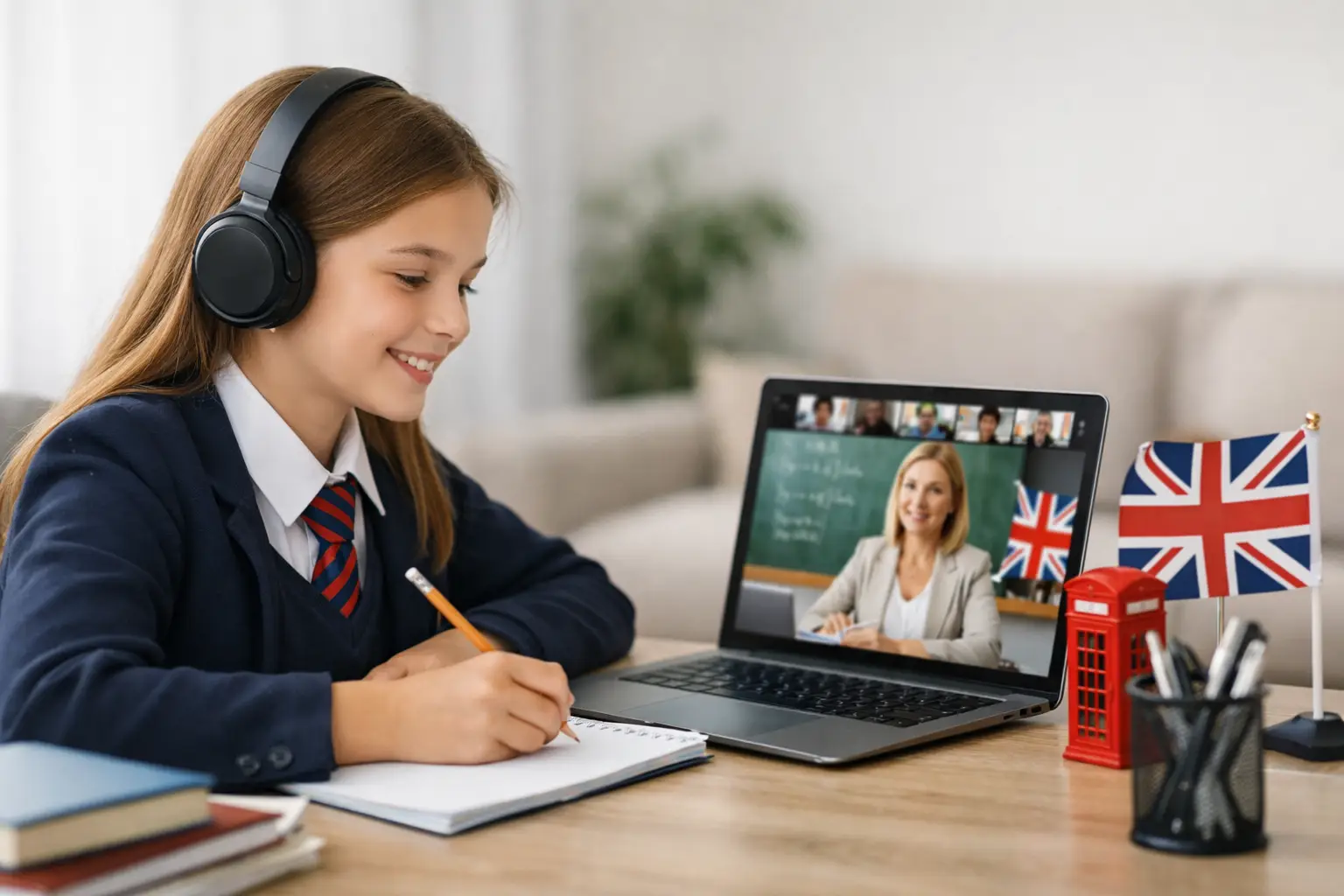
A child can be in Dubai, Dorset or on a training schedule that changes every week – and still follow a structured British education with qualified teachers, clear routines and recognised qualifications. That is the simplest way to understand how online British schooling works. At its best, it is not a library of videos or a set of worksheets sent home. It is a real school experience, delivered online with academic standards, live teaching and meaningful pastoral care.
For families considering this route, the key question is not whether learning can happen online. It can. The more useful question is what kind of online school a child is actually joining. The difference between a low-contact platform and a genuine school model is substantial, and it affects progress, confidence and day-to-day family life.
How online British schooling works in practice
Online British schooling follows the same broad academic journey as a traditional school using the National Curriculum for England. Children move through primary, lower secondary and upper secondary stages in age-appropriate year groups, studying a planned curriculum with clear progression from one year to the next.
The strongest online schools do not simply upload content and leave pupils to work independently. They timetable live lessons, set regular homework, assess understanding, report to parents and provide direct access to teachers. In other words, they recreate the core disciplines of school while using technology to make the model more flexible and globally accessible.
For younger pupils, this usually means a carefully structured school day with teacher-led lessons, interactive activities and support in developing early literacy, numeracy and classroom habits. For older students, the model becomes more subject-specific, with specialist teachers, coursework where relevant and preparation for external examinations such as IGCSEs and A-Levels.
This structure matters because children generally do best when expectations are clear. A timetable gives shape to the day. Live lessons create accountability. Regular teacher contact means misunderstandings are identified early, rather than becoming patterns.
The curriculum is British, but the classroom is global
One reason families choose this model is that it keeps children on a recognised British pathway without requiring them to live near a particular school site. That can be especially valuable for expatriate families, internationally mobile households, home-educating parents who want more structure, and young athletes or performers whose schedules do not fit conventional schooling.
The curriculum itself remains familiar. In primary years, pupils focus on English, mathematics, science and the wider foundation subjects. In lower secondary, subject teaching becomes more defined and academically demanding. At upper secondary level, students typically move into IGCSE options and then A-Level study, depending on the school and the pathway chosen.
What changes is the mode of delivery. Lessons are taught through a secure online classroom. Resources are shared digitally. Work is submitted online. Feedback is given through marked assignments, live discussion and progress reporting. Parents often have more visibility than they would in a traditional school, which many families appreciate.
That said, not every online setting offers the same depth. Some are designed around self-paced study with minimal teacher interaction. Others operate much more like independent schools, with full timetables, very small classes and frequent contact between staff, students and parents. The educational experience is not equivalent across these models, so it is worth asking direct questions before enrolling.
Live teaching versus content delivery
This is where much of the confusion sits. Many providers use the language of online schooling, but what they offer may be closer to online course access. A child logs in, works through pre-recorded material and receives limited live support. For some older, highly independent students, that can be workable. For many children, it is not enough.
Real teaching is different. It involves a qualified teacher explaining new material, checking understanding in real time, adapting pace, inviting discussion and building a relationship with the class. It also allows for subtle educational decisions that static content cannot make – when to revisit a concept, when to stretch a confident learner and when a child needs reassurance rather than more tasks.
For families seeking quality comparable to a strong independent school, live lesson hours matter. So do class sizes. Small classes make it easier for teachers to know each pupil well, notice gaps quickly and create a sense of belonging. In a premium online school, pupils should feel seen, not processed.
What a typical school week looks like
A well-run online British school usually operates on a clear weekly timetable. Pupils attend scheduled lessons, complete prep or homework between classes, and take part in registration, assemblies, clubs or enrichment depending on their age.
For younger children, parents may need to provide more practical support at the start, particularly with routines, devices and workspace set-up. As confidence grows, most pupils become increasingly independent. Older students are generally expected to manage their timetable, assignments and revision with more autonomy, but they should still be guided by teachers and tutors.
The practical set-up at home matters more than many families expect. Children need a quiet place to work, reliable internet access, a suitable device and a daily rhythm that feels like school rather than casual home study. Online education offers flexibility, but it still benefits from discipline.
Time zones also need careful thought. Some international families choose a school timetable that aligns neatly with local hours. Others accept an early start or later finish because they value a specific curriculum and teaching model. There is no universal answer here – it depends on the child, the family routine and the school’s scheduling options.
Assessment, reporting and academic standards
Parents often worry that online education may be harder to monitor. In reality, good online schools can offer very strong visibility. Because lessons, assignments and attendance all sit within digital systems, teachers can track participation and progress closely.
Assessment usually combines classwork, quizzes, written assignments, topic tests and formal examinations where appropriate. The most important point is that assessment should be regular and used well. Marks alone are not enough. Families need clear feedback about attainment, effort, next steps and how a child is managing more broadly.
At secondary level, recognised qualifications are central. If a family wants the option of university progression in the UK or internationally, exam pathways matter. Students should be taught by subject specialists who understand syllabus requirements and can prepare them properly for IGCSE and A-Level success.
Standards also depend on the school itself. Accreditation, inspection frameworks and teacher credentials are not minor details. They are some of the clearest indicators that an online school is operating with seriousness and accountability rather than simply marketing convenience.
Pastoral care is not optional
Families sometimes assume online schooling is only about academics. In practice, pastoral care is one of the features that most shapes a child’s experience. Children need encouragement, routines, belonging and trusted adults who know when something is not quite right.
That is especially true online, where schools must be intentional about relationships. Effective pastoral care includes tutor support, safeguarding systems, regular check-ins, close communication with parents and a school culture that values each pupil as an individual.
This is one of the clearest dividing lines between premium online schooling and basic remote learning. A strong school does not just teach subjects. It notices confidence, engagement, wellbeing and social development. It creates opportunities for pupils to speak, collaborate and build friendships across borders.
At Sophia High School, for example, this high-contact approach is central to the model: small classes, live teaching and consistent teacher relationships are designed to give families both academic rigour and genuine support.
Who online British schooling suits best
This model can work exceptionally well for families who need flexibility without lowering expectations. That includes children living overseas, students moving between countries, pupils with demanding training schedules and families who want more personalised attention than they are finding in large schools.
It can also suit children who thrive in calm, focused environments and benefit from smaller classes. For some pupils, removing long commutes, overcrowded classrooms or frequent disruption leads to stronger concentration and better outcomes.
But it is not identical to a physical school, and that distinction matters. Some children need the energy of a busy campus and extensive face-to-face social contact. Others need time to adjust to learning through a screen. The best decision is usually made not by asking whether online schooling is better in the abstract, but whether this particular child is likely to flourish in this particular model.
When families ask the right questions – about live lesson hours, teacher qualifications, class sizes, curriculum pathways, safeguarding, pastoral care and exam preparation – the picture becomes much clearer. Online British schooling works well when it is genuinely school: structured, ambitious, relational and accountable.
For the right child, it offers something powerful – the standards of a British education, the flexibility modern family life often demands, and the kind of individual attention that helps students grow with confidence.