
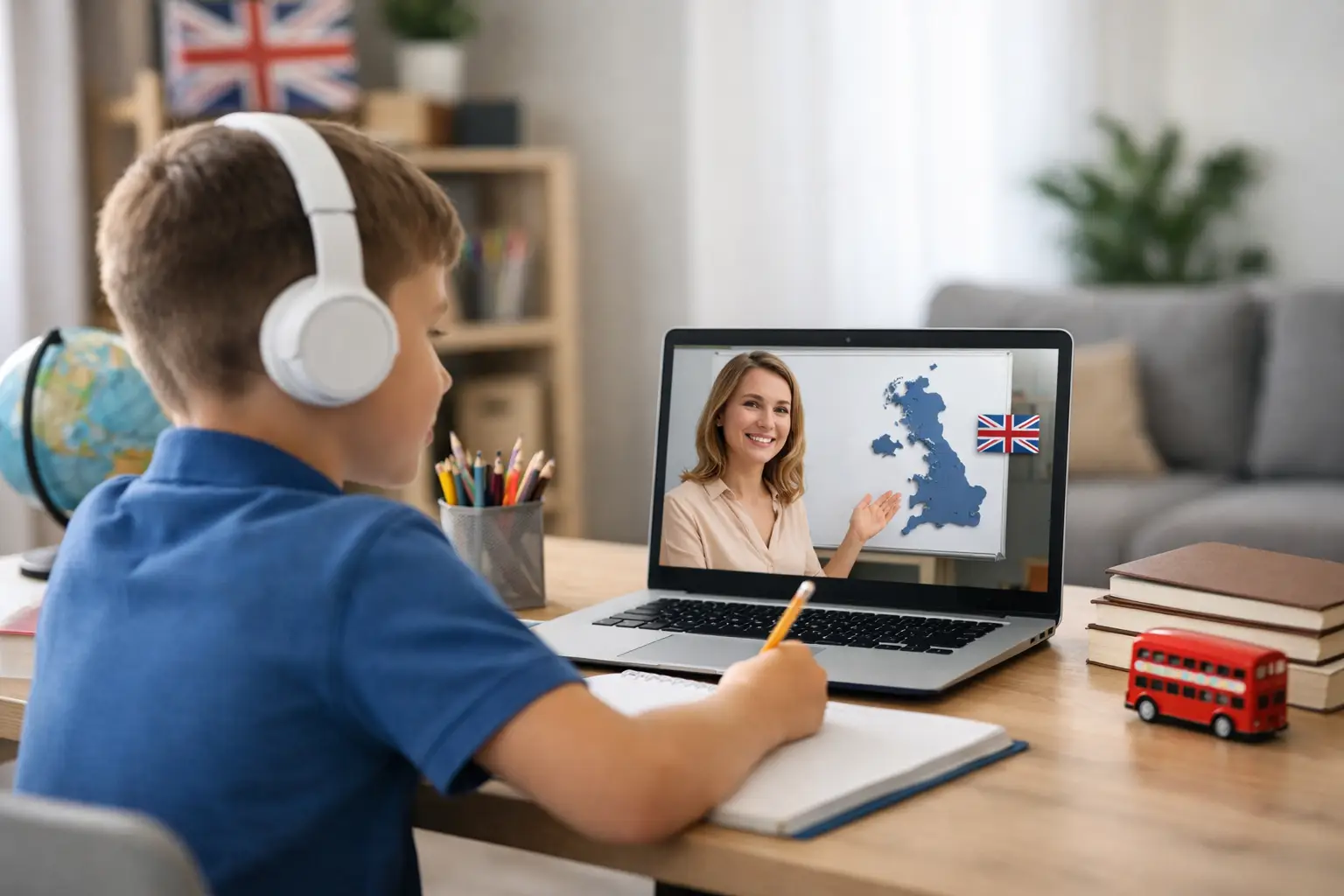
A reception child learning phonics from Singapore, a Year 4 pupil joining maths from Dubai, and a busy family in Surrey needing more structure than traditional home education can offer – this is where the online primary school UK curriculum becomes far more than a convenience. For many families, it is the difference between patchy provision and a serious, well-supported education.
That distinction matters. Not all online schooling is built to deliver a true primary education. Some platforms offer worksheets, recorded videos and little teacher contact. Others provide a genuine school experience with live lessons, qualified teachers, pastoral support and a curriculum planned with the same care you would expect from a high-quality British independent school.
What an online primary school UK curriculum should actually include
At primary level, the UK curriculum is not simply a list of topics to cover. In a strong school, it is a carefully sequenced journey through early reading, writing, mathematics, science and the wider foundation subjects, taught in a way that matches children’s developmental stages.
For families looking at online provision, the key question is whether the school is truly delivering the National Curriculum for England, or offering a loose interpretation of it. The difference shows up quickly in day-to-day teaching. A proper primary curriculum builds core knowledge steadily, returns to concepts over time, checks understanding regularly and develops confidence as well as attainment.
English and maths sit at the centre, as they should. In the early years and lower primary, phonics, reading fluency, handwriting, spelling and number sense need explicit, live teaching. These are not areas where many children thrive through passive learning alone. By Key Stage 2, pupils should be moving into richer reading comprehension, more extended writing, arithmetic fluency and mathematical reasoning, with teaching that keeps standards high while making room for individual support.
Science, humanities, computing, art, music and personal development also matter. A good online primary school does not narrow the curriculum simply because children are learning remotely. It uses the online environment intelligently while still preserving breadth, curiosity and creativity.
The difference between real teaching and content delivery
This is where many parents need to look beyond marketing language. An online primary school UK curriculum is only as strong as the teaching behind it.
Recorded lessons and self-marking tasks may look efficient, but primary-aged children usually need interaction. They need teachers who can spot hesitation, correct misconceptions, encourage participation and adjust pace in the moment. They also need routines, relationships and accountability.
A live-taught model changes the experience entirely. Children ask questions in real time. Teachers can check pronunciation in phonics, guide sentence construction, model methods in maths and prompt quieter pupils to contribute. Small classes make this even more effective, because younger learners are far less likely to disappear into the background.
There is a practical point here too. Parents often choose online education for flexibility, but flexibility without structure can become exhausting. In primary years especially, most families benefit from a timetable that creates rhythm and predictability. Real teaching reduces the burden on parents and gives children a clearer sense that they belong to a school, not just a platform.
What parents should expect from a high-quality online primary experience
A premium online primary school should offer more than curriculum coverage. It should provide the educational architecture around that curriculum.
That begins with qualified teachers who understand both subject teaching and child development. Primary education is specialised work. Teaching a six-year-old to blend sounds, a nine-year-old to write persuasively and a ten-year-old to reason mathematically requires expertise, not simply enthusiasm or generic tutoring experience.
Class size matters as well. In a physical classroom, large numbers can already limit individual attention. Online, that problem becomes even more pronounced if the model is not designed carefully. Small classes support participation, stronger feedback and better safeguarding oversight. They also allow teachers to know each child properly, which is central to both progress and wellbeing.
Parents should also look for visible assessment. That does not mean constant testing. It means regular checks on understanding, clear reporting, feedback that is actually useful and communication that gives families confidence about progress. Strong schools do not leave parents guessing.
Pastoral care is another marker of quality. Primary pupils need encouragement, belonging and trusted adults. Online schooling should never mean emotionally distant schooling. The best schools build community deliberately through tutor support, assemblies, enrichment and close communication with families.
Why families choose online primary education
The reasons are varied, and they are not all the same. Some families live internationally and want continuity in the British system. Others are based in the UK but need an alternative to overcrowded classrooms, long journeys or schools that cannot meet their child’s needs. Some are home-educating families looking for more structure, professional teaching and recognised standards. Others need an education that works around elite sport, performance schedules or frequent travel.
What these families often share is not a desire for an easier option. It is a desire for a better fit.
That said, online primary education is not automatically right for every child or every household. Younger children still need adult support with routines, technology and transitions, especially at the start. Families should be realistic about home setup, quiet learning space and the value of consistent daily habits. The strongest online schools make this easier, but they do not remove the need for partnership between school and home.
How to judge whether a school meets proper UK standards
If a school claims to offer the online primary school UK curriculum, parents should ask what sits behind that claim. Is the school aligned with the National Curriculum for England? Is it inspected or accredited? Are teachers fully qualified? How many live teaching hours are actually provided each week? What does safeguarding look like in practice? How are parents kept informed?
These questions are not minor details. They tell you whether the school is operating with the seriousness of an institution or the looseness of a content provider.
Accreditation and adherence to recognised British standards carry real weight, especially for families planning a long-term educational pathway. Primary education should not sit in isolation. It should prepare children for a coherent route into lower secondary, IGCSEs and later sixth form study if that is the chosen path.
This continuity is one of the major advantages of a well-designed online school. Children are not just being kept occupied for a year. They are building within a system that has progression, accountability and ambition.
Online primary school UK curriculum in practice
In practice, the best models balance academic rigour with warmth. Children need clear expectations, but they also need joy in learning. They need challenge, but not chaos. They need independence, but not isolation.
That is why live lesson frequency matters. A school offering substantial weekly teaching hours will feel very different from one built mainly around tasks to complete alone. More contact time usually means more explanation, more feedback, stronger relationships and less pressure on parents to act as substitute teachers.
At Sophia High School, this distinction is central: real teaching, not content delivery. For families seeking a premium British online education, that means small classes, fully qualified UK teachers, structured live learning and the standards expected from an ambitious independent school environment.
The online format itself can also bring advantages when done well. Children often gain confidence speaking in class, become more comfortable with digital tools and benefit from a calmer environment than some physical schools can offer. International classrooms can widen perspective too, allowing pupils to learn alongside peers from different countries while staying grounded in a British curriculum.
Still, the model works best when technology serves education rather than leading it. The platform should support excellent teaching, not replace it.
Choosing with confidence
Parents are right to be discerning here. The phrase online primary school can describe very different experiences, and primary years are too important to leave to chance. This is the stage where children form habits of learning, attitudes to school and foundations that shape everything that follows.
So look for substance. Look for live teaching, small classes, qualified staff, clear standards and a school that takes both achievement and care seriously. Ask how the day works, how children are supported, how progress is measured and how the school helps pupils feel known.
A strong online primary education should feel reassuringly rigorous and deeply human at the same time. When those two elements come together, families do not have to choose between flexibility and excellence – they can expect both.